Table of contents
- Introduction: Sustainability in the logistics industry
- Pallet repair & recycling as a key to the circular economy
- Pallet Pooling: Efficient circular economy in logistics
- Professional repair services
- Innovative repair technologies for sustainable pallet use
- Comprehensive services for optimal pallet utilization
- Development of innovative recycling concepts
- Recycling irreparable pallets: Maximum resource utilization
- Upcycling: Creative recycling through pallet furniture
- Economic advantages of sustainable pallet use
- Technological innovations in the pallet sector
- Environmental impact and sustainability
- Quality assurance and standards
- Future perspectives of the pallet sector
- Conclusion: Sustainability as a success factor
The modern logistics industry faces the challenge of operating more sustainably and efficiently. At the center of this development are innovative concepts for pallet repair, reuse, and recycling. Through professional recycling concepts for pallets and systematic waste prevention, economic advantages are created that benefit both the environment and companies.
Pallet Pooling: Efficient circular economy in logistics
Pallet pooling systems are revolutionizing how companies handle transport packaging. These innovative systems are based on the principle of shared usage and optimal utilization of pallets across various companies.
Promotion of sustainable pooling systems
The promotion of pallet pooling systems is at the heart of modern logistics concepts. Through collaboration with pooling providers, synergistic effects arise that benefit all parties involved. These collaborations enable the Wintergroup to professionally repair rental pallets from the pooling system and deliver them back to customers.
The pooling system works according to a simple but effective principle: instead of every company buying and managing its own pallets, pallets are provided by a pool provider. After use, the pallets return to the pool, where they are checked, repaired, and reissued. This circular economy significantly reduces the total demand for pallets.
Professional repair services
The Wintergroup offers professional pallet repair. This service includes the complete refurbishment of damaged pallets, from diagnosis to repair to quality control. Through these services, pallets that would otherwise be disposed of are returned to the economic cycle.
The repair processes are highly specialized and require both craftsmanship and technical precision. Modern repair facilities make it possible to return even heavily damaged pallets to a saleable condition. Both traditional craft techniques and state-of-the-art technologies are used.
Innovative repair technologies for sustainable pallet use
In recent years, pallet repair has developed into a highly technical field. Modern repair methods combine traditional craftsmanship with innovative technologies to ensure maximum efficiency and quality.
Use of modern robot technology
The use of modern robot technology, as employed by the Wintergroup, is revolutionizing pallet repair. Automated systems can precisely measure pallets and identify damage. This technology not only increases efficiency but also ensures consistently high quality standards.
Robot-assisted repair systems work with great precision. Sensors automatically detect the type and extent of damage, while specialized robots prepare the pallets for further repair work. This automation not only reduces repair time but also minimizes material consumption.
Sustainable energy supply
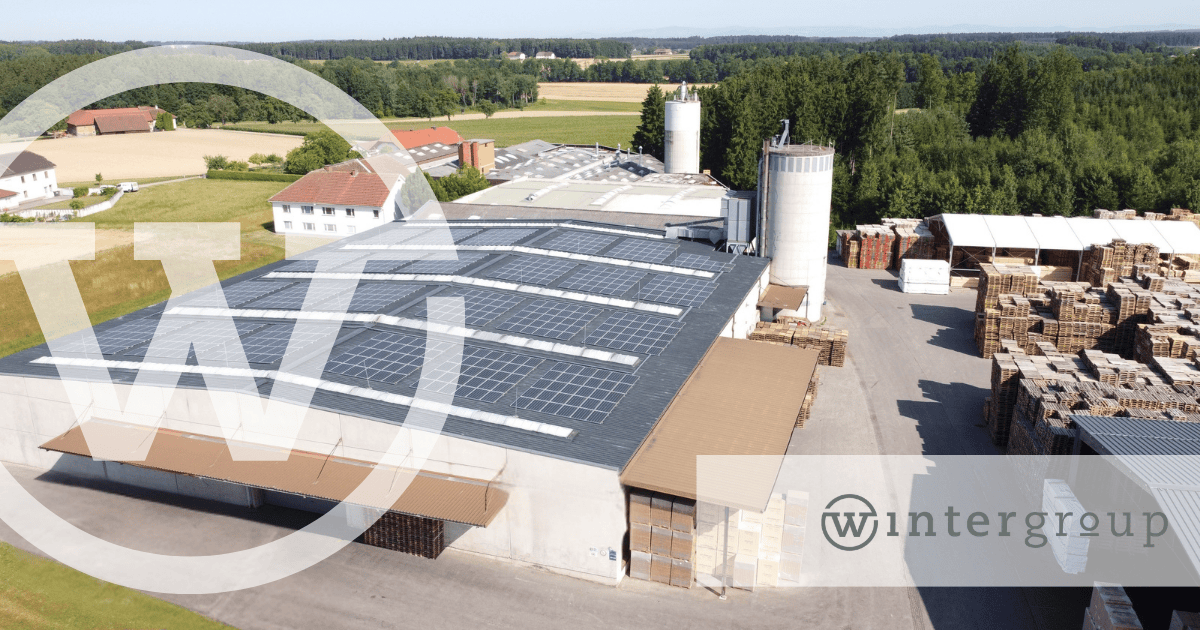
At the Wintergroup, the facilities are powered by self-produced PV green electricity, underscoring the commitment to sustainability. Modern production facilities are operated entirely with renewable energy, which significantly improves the carbon footprint of pallet repair. This environmentally friendly energy supply makes the repair processes not only economically but also ecologically attractive.
Photovoltaic systems on the roofs of the production halls generate clean electricity that is used directly in the repair processes. Excess energy is fed into the public grid. This energy self-sufficiency of the Wintergroup makes pallet repair independent of fluctuating energy prices.
Comprehensive services for optimal pallet utilization
The Wintergroup offers a wide range of services that go far beyond simple repair. These holistic services include sorting, repair, and tailor-made solutions for various customer requirements.
Professional sorting and quality control
Services such as sorting and repair form the foundation for efficient pallet use. Incoming pallets are first sorted according to various criteria: pallet type, condition, repairability, and quality class. This systematic sorting allows for the development of the optimal recovery strategy for each pallet type.
Sorting is carried out both manually and automatically. Experienced employees assess the condition of the pallets and decide on their further use. Modern sorting systems support this process through automatic recognition of pallet types and damage assessment.
Customer-specific repair solutions
Each customer has different requirements regarding pallet quality and specifications. The Wintergroup therefore develops customer-specific repair solutions that are tailored exactly to individual needs. These customized services range from standard repairs to complex refurbishments for special applications.
Development of innovative recycling concepts
The development of recycling concepts and waste prevention is at the heart of sustainable pallet use. Through innovative approaches, new recovery pathways are opened up, and waste volumes are systematically reduced.
Systematic waste prevention
Waste prevention begins with pallet repair. Preventive measures and optimized repair processes significantly extend the service life of pallets. This strategy not only reduces waste volumes but also lowers costs for new acquisitions.
Preventive maintenance and timely repairs prevent small damages from becoming major problems. Regular inspections and professional maintenance can extend the service life of pallets by up to 50%. This proactive approach is both economically and ecologically sensible.
Innovative recovery concepts
Modern recycling concepts go far beyond traditional wood recovery. Creative approaches create new application possibilities for pallet materials, offering both ecological and economic benefits.
Recycling irreparable pallets: Maximum resource utilization
Even irreparable pallets are not simply discarded but go through a structured recycling process. The recycling of irreparable pallets follows the principle of maximum resource utilization: good parts are reused, while the rest is processed into wood chips.
Selective dismantling and parts recovery
The dismantling of irreparable pallets is carried out selectively and purposefully. Reusable boards, blocks, and fasteners are carefully removed and used for the repair of other pallets. This approach maximizes yield and reduces the need for new materials.
Qualified employees assess every single part for its recyclability.
Wood chip production from residual materials
The no longer usable residues are processed into high-quality wood chips. These wood chips find diverse uses in the biomass industry, from energy generation to the production of wood-based materials. Through this recovery, even the last remains of the pallets stay in the economic cycle.
Modern wood chip production plants create uniform chips with defined properties. This quality is crucial for further use in industrial processes. The produced wood chips meet all relevant norms and quality standards.
Upcycling: Creative recycling through pallet furniture

By upcycling pallets into furniture and other products, the Wintergroup demonstrates the creative possibilities of sustainable recycling. The manufacture of pallet furniture combines sustainability with design and creates unique products with high utility value.
Design and functionality combined
Pallet furniture has long been more than just a trend – it is an expression of conscious sustainability and creative design. Professional refurbishment and thoughtful design result in high-quality furniture pieces that are convincing both functionally and aesthetically.
The production of pallet furniture requires both craftsmanship and creative vision. Every piece of furniture is individually designed and adapted to specific requirements. In the process, both classic and modern design elements are integrated.
Diverse product range
The product range extends from simple garden furniture to complex furnishings for offices and living spaces. Tables, chairs, shelves, and even entire lounges can be made from recycled pallets. This diversity shows the enormous potential of the Wintergroup's upcycling approach.
Economic advantages of sustainable pallet use
The implementation of sustainable pallet concepts brings significant economic advantages. Companies that focus on repair, recycling, and pooling can significantly reduce their logistics costs while simultaneously achieving their sustainability goals.
Cost reduction through reuse
The reuse of repaired pallets is significantly more cost-effective than purchasing new ones. Through professional repair services, companies can reduce their pallet costs by up to 40%. These savings add up to substantial amounts over time.
The cost savings arise not only from lower acquisition costs but also from optimized logistics processes. Pooling systems reduce storage costs and improve capital efficiency, as fewer pallets are needed in circulation.
Technological innovations in the pallet sector
Digitalization and automation are fundamentally changing the pallet sector. New technologies enable more efficient processes, better quality control, and optimized resource utilization.
Digital tracking systems
Modern tracking systems enable the seamless tracking of pallets throughout the entire supply chain. RFID chips and GPS sensors provide real-time data on location, condition, and frequency of use. This information is crucial for the optimization of repair and maintenance cycles.
Predictive maintenance
Artificial intelligence and machine learning enable predictive maintenance. Algorithms analyze usage data and can predict when a pallet needs to be repaired. This preventive approach reduces downtime and extends the service life of the pallets.
Environmental impact and sustainability
The ecological benefits of sustainable pallet use are substantial. Through repair, recycling, and reuse, natural resources are conserved and CO2 emissions are reduced.
CO2 reduction through reuse
Every repaired pallet saves approximately 15 kg of CO2 equivalents that would be produced during the manufacture of a new pallet. With millions of pallets, these savings add up to significant climate protection effects.
Resource conservation
The reuse of pallets significantly reduces the demand for virgin wood. Through systematic repair and recycling, up to 80% of the original material can be reused. This conservation of resources contributes to the preservation of forests.
Quality assurance and standards
Quality assurance is crucial for the success of sustainable pallet concepts. Only through consistent quality control can repaired pallets provide the same performance as new pallets.
Standard-compliant repair
All repairs are carried out according to valid norms and standards. This ensures that repaired pallets meet the same load-bearing and safety requirements as new products. Regular quality checks and certifications confirm compliance with these standards.
Continuous improvement
Quality management systems enable the continuous improvement of repair processes. Customer feedback and performance data are incorporated into the further development of procedures, thereby constantly increasing quality and efficiency.
Future perspectives of the pallet sector
The future of the pallet sector lies in the intelligent networking of technology, sustainability, and economic efficiency. Innovative concepts will further increase efficiency and enable new business models.
Circular economy as a guiding principle
The circular economy is becoming the dominant principle in the pallet sector. Linear business models are already being replaced at the Wintergroup by circular approaches that avoid waste and utilize resources optimally. This transformation requires new ways of thinking and innovative business models.
Conclusion: Sustainability as a success factor
The Wintergroup impressively shows how sustainable management in the pallet sector can be successfully implemented. Through the combination of repair, recycling, upcycling, and innovative technologies, economic advantages arise that benefit both companies and the environment.
The promotion of pallet pooling systems, the cooperation with pooling providers, and the development of innovative recycling concepts create the foundation for a sustainable future of pallet logistics. Modern robot technology and supply through self-produced PV green electricity underscore the Wintergroup's commitment to sustainability and innovation.
Companies that rely on these sustainable concepts position themselves optimally for the future. They reduce costs, conserve resources, and actively contribute to climate protection. The pallet industry is becoming a pioneer of the circular economy and demonstrates how sustainability and economic efficiency can be successfully combined.