Currently, there is a lot to read in the media about wood chips, as the energy crisis often provides a reason to rethink and realign energy issues. With wood as a renewable raw material, wood chips are clearly an interesting perspective. In this context, we will address the area of sustainability, which is particularly important to us and which must be examined more closely in relation to wood chips.
Heating with wood is a very attractive option: the energy source comes from a renewable material that can also be grown locally – independent of international developments. In Austria, about half of the land is covered by forest. Our stock of forests is actually growing; contrary to popular belief, the tree population in the country is increasing (also due to economic use), and young, managed areas, in particular, show strong growth and CO2 storage.
The fundamental climate neutrality (CO2 neutrality) is given because the wood binds exactly as much CO2 while growing as it releases when burned. However, there are two sticking points regarding the sustainable production of wood for energy generation: combustion produces particulate matter, meaning that appropriate systems are required to prevent this in the escaping air. But even small private stoves without special devices emit almost no particulate matter; in practice, large-scale particulate matter in Austria is only produced by fireworks at the turn of the year.
And – this is the actual "open" question – there is also a temporal dimension, because a tree must first regrow after use. And that takes at least 20 years, so one often hears that CO2 recovery is delayed to subsequent years by binding it in tree growth.
However, that is only half true. Because on the one hand, this is not about "burning and regrowing" as a single event, but about a permanent cycle. The "free" volume of CO2 is always the same. And secondly, despite its use, the forest stock as a whole is actually growing, so the total amount of stored CO2 is therefore continuously increasing. Even in the general calculation, the use of wood chips for heating therefore appears advantageous.
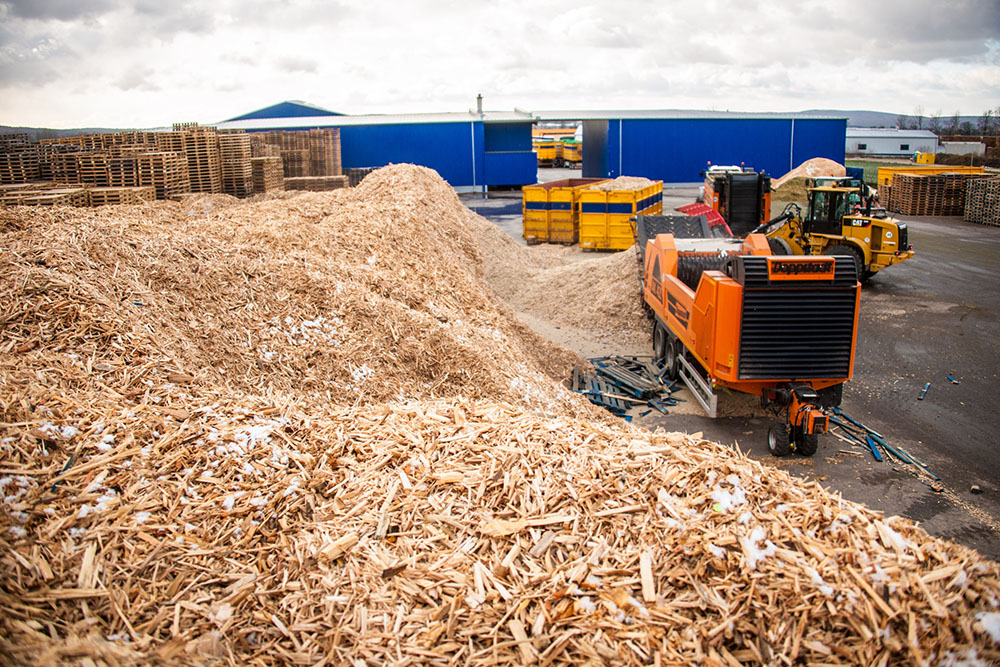
We at Wintergroup have particularly high standards for our actions regarding more sustainability. And this also entails – and especially here! – even more than just the use of wood as an energy source when using wood chips. For us, the area of wood chips is also an opportunity to once again put existing wood from other parts of the company group to a sensible use in the recycling cycle. The valuable wood at the end of its usability in our pallet operations is freed from nails and foreign materials through automated processes and processed into wood chips. And the wood that is generated during forestry work is processed and used to a high standard.


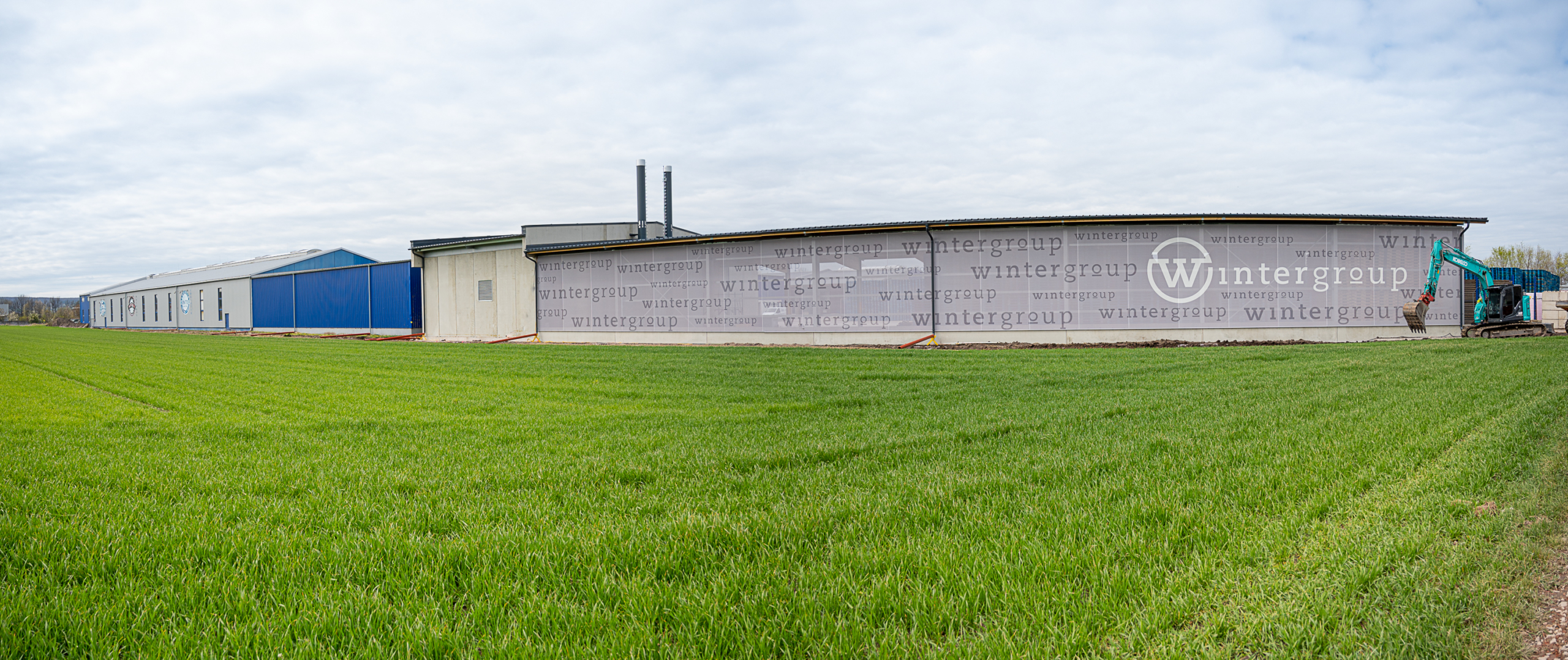
Hackgut Winter GmbH has existed since 1999 and is part of the Wintergroup. We supply 400,000 cubic meters of certified quality wood chips annually. We also draw on wood from forestry work and recycling. What is created are wood chips in various types and qualities to meet all customer requirements.
Our conclusion is therefore positive: Not only is wood in general an interesting and sustainable energy source, but the Wintergroup also ensures a longer recycling cycle by further utilizing already used material. The valuable wood is thus used more efficiently, sustainably, and in a climate-friendly manner – entirely in line with our high standards of sustainability.