Table of contents
- Why energy efficiency is more than just a matter of cost today
- Responsibility begins in your own company
- The path to energy efficiency: not a sprint, but a process
- Photovoltaics as a visible sign of change
- Renewable energy in daily operations
- Saving energy in detail: many small adjustments
- Employees as part of the solution
- Profitability and mindset – not a contradiction
- Regional impact through conscious use of energy
- Why transparency creates trust
- Conclusion: Energy efficiency as part of corporate culture
- FAQ
Why energy efficiency is more than just a matter of cost today
For a long time, energy was something we took for granted. It came from the socket, from the pipeline, from the background. Only rising prices, supply shortages, and noticeable climate change have made it clear to many companies how central energy is to their own operations – and how great the responsibility is that comes with it.
Today, energy efficiency in a company means more than just saving money. It is about attitude. About the question of how consciously one handles resources and what footprint one's own actions leave behind. For the Wintergroup, this topic is not a short-term project, but part of a long-term development.
Responsibility begins in your own company
Corporate responsibility does not begin with big announcements, but in everyday life. In buildings, machines, processes. Where energy is consumed, often without one consciously noticing.
The Wintergroup recognized early on that sustainable business practices start in-house. Not perfectly, not overnight – but step by step. Energy efficiency was not seen as a restriction, but as an opportunity to operate more consciously and become more independent.
This attitude continues to shape decisions today: Investments are evaluated not only based on short-term profitability, but also on long-term impact.
The path to energy efficiency: not a sprint, but a process
Many companies are faced with the question: Where to start? The reality is often complex. Buildings have grown, facilities have been expanded over years, processes have evolved historically. That is precisely why energy efficiency requires patience.
Instead of wanting to change everything at once, a sensible approach relies on analysis and prioritization. Where is particularly high energy consumed? Which measures bring tangible effects? And which changes can be well integrated into existing workflows?
For the Wintergroup, it was clear: Energy efficiency is not a one-off project, but an ongoing process that is regularly reviewed and adjusted.
Photovoltaics as a visible sign of change
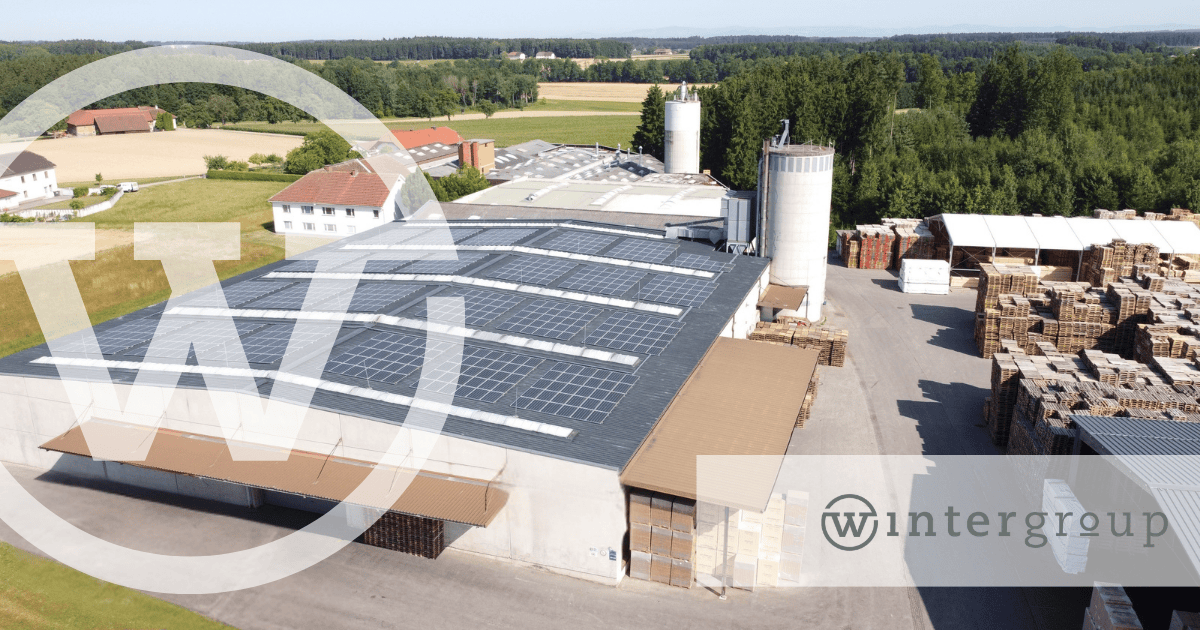
An important building block on this path is photovoltaics. It is visible, tangible, and a clear sign that renewable energy plays a role in the company. Using solar energy makes it possible to cover part of one's own electricity needs and become more independent of external factors.
But photovoltaics is more than just technology on the roof. It stands symbolically for a change in perspective: not just consuming energy, but generating it oneself. Not just discussing responsibility, but putting it into practice.
For many employees and visitors, this becomes exactly that – visible and understandable.
Renewable energy in daily operations
Renewable energy does not unfold its impact in a single moment, but in everyday life. When machines run on self-generated electricity. When lighting, IT, and infrastructure are efficiently coordinated. When consumption is measured and reflected upon consciously.
Using renewable energy in operations also means rethinking processes. When is particularly large amounts of electricity needed? Where can peak loads be avoided? And how can systems work together in such a way that energy is used sensibly?
These questions accompany the Wintergroup continuously – not as a burden, but as part of modern corporate management.
Saving energy in detail: many small adjustments
In addition to major measures like photovoltaics, it is often many small changes that achieve a lot in total. Energy efficiency arises in the detail:
- Optimized lighting systems
- Conscious handling of heating and cooling
- More efficient machines and maintenance intervals
- Clear responsibilities for energy issues
These steps appear unspectacular, but they are crucial. They show that energy efficiency does not depend on individual technologies, but on the interaction of many factors.
For the Wintergroup, this means: regularly looking, readjusting, and learning from experience.
Employees as part of the solution
Technology alone is not enough. Energy efficiency only works sustainably if people support it. Employees are the ones who work daily with systems, spaces, and processes. Their awareness significantly determines how effectively measures work.
Open communication, transparent information, and incorporating experiences from everyday work are therefore central. Those who understand why certain steps are taken act automatically more consciously.
This is how energy efficiency does not become a requirement, but a common goal.
Profitability and mindset – not a contradiction
A common thought: sustainability and profitability are opposites. Practice often shows the opposite. Investments in energy efficiency pay off in the long term – not just financially, but also in terms of stability and planning security.
For the Wintergroup, it is clear: responsibility and economic thinking are not mutually exclusive. On the contrary. Those who invest consciously today create room for maneuver tomorrow. Lower energy consumption means less dependency and more control over operational costs.
This perspective makes energy efficiency a strategic issue, not just a pure cost-cutting measure.
Regional impact through conscious use of energy
Companies are part of a regional fabric. Their energy consumption has an impact beyond their own operational boundaries. Those who save energy and use renewable sources relieve not only their own budget but also the infrastructure and the environment.
The measures taken by the Wintergroup therefore also have a regional dimension. They show that responsible action starts on a small scale – and can have a major impact.
Especially for local companies, this role model effect should not be underestimated.
Why transparency creates trust
Energy efficiency is not a topic that is ever finished. It continues to evolve with new technologies, new requirements, and new insights. This makes transparency all the more important.
Speaking openly about which steps have already been taken and where there is still potential creates trust. Both internally and externally. It shows that it is not about perfection, but about honest effort and continuous improvement.
This openness is a central component of the Wintergroup's corporate culture.
Conclusion: Energy efficiency as part of corporate culture
Energy efficiency in the company is neither a trend nor a mandatory exercise. It is an expression of a mindset. A mindset that takes responsibility seriously, thinks long-term, and is prepared to continue developing.
With measures such as photovoltaics, the use of renewable energy, and many small improvements in everyday life, the Wintergroup shows that sustainable business is feasible – step by step, realistically, and effectively.
Not loud. But noticeable.
FAQ
What does energy efficiency mean for a company in concrete terms?
The conscious use of energy through technical, organizational, and human measures.
Why is photovoltaics useful for businesses?
It enables self-generated electricity and reduces dependence on external energy sources.
Is a single measure enough for real savings?
Usually not. The interaction of many small and large steps is decisive.
What role do employees play in energy efficiency?
A central one. Their behavior and understanding strongly influence actual energy consumption.
Is energy efficiency just a cost issue?
No. It concerns responsibility, future viability, and corporate mindset.
How long does it take for measures to have an effect?
Some effects are seen quickly, others unfold their impact over years.
Are investments in energy efficiency economically viable?
In the long term yes, as they reduce costs and increase planning security.
Why is transparency important for this topic?
It builds trust and fosters a common understanding of sustainable decisions.
Can every company become more energy-efficient?
Yes, regardless of size or industry – the path is individual, but possible.