Table of contents
- A company with roots in the region
- Family business since 1999 – more than just a business structure
- Creating jobs means creating perspectives
- Regional value creation begins with trust
- Collaboration with local businesses and partners
- Training, development, and long-term commitment
- Economic stability as a contribution to the region
- Responsibility that goes beyond numbers
- Why local companies are so important for regions
- Conclusion: Sustainable impact through proximity and consistency
- FAQ
A company with roots in the region
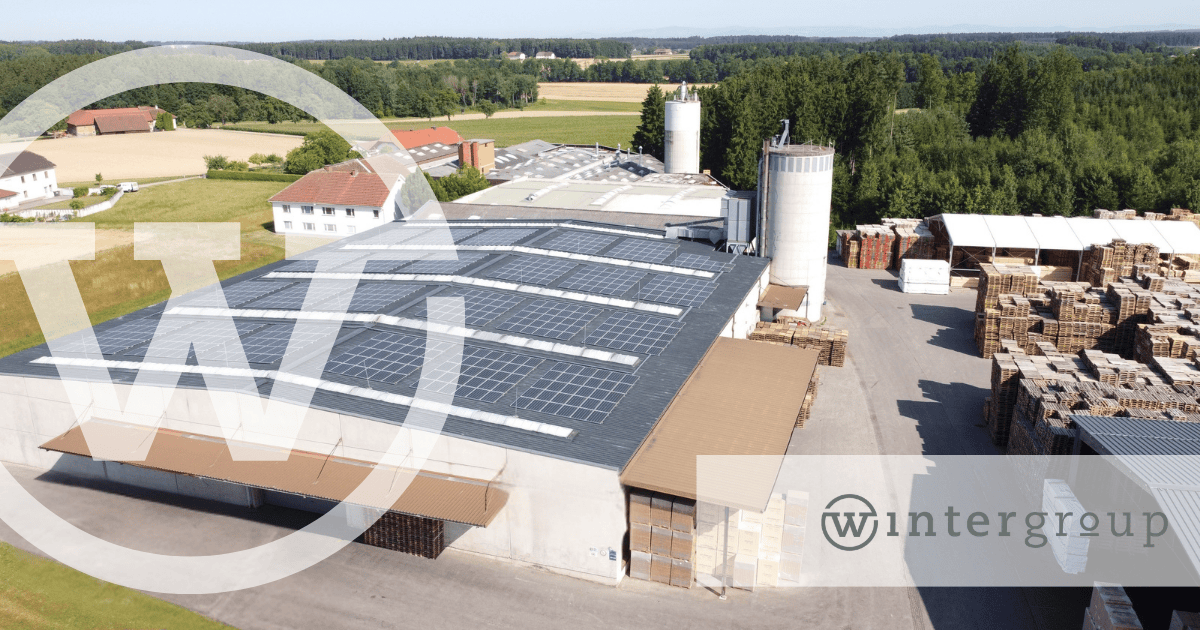
When talking about the regional economy, it is rarely just about numbers. It is about people, places, and relationships that have grown over years – sometimes decades. The Wintergroup is an example of how a company does not just work in a region, but lives with it.
Since its founding in 1999, the Wintergroup has been closely connected to its environment. Not as an abstract corporate entity, but as part of an economic and social structure. Decisions here are not made in isolation, but always with an eye on what they mean for employees, partner companies, and the region as a whole.
This attitude is not a trend, but the result of a development that has focused on proximity, reliability, and responsibility from the very beginning.
Family business since 1999 – more than just a business structure
A family business is not automatically better than other forms of business. But it brings with it certain characteristics that can have a long-term effect. At the Wintergroup, this is evident above all in the way they think and plan.
Those who do not build a company for a quick sale, but for the next generation, make decisions differently. More sustainably. More cautiously. Often more humanely, too. Since 1999, the focus at the Wintergroup has not been on short-term growth, but on stability and continuous development.
This is evident, among other things, in the fact that responsibility is not delegated, but lived. Management here does not mean distance, but proximity to the operation, the employees, and the daily processes.
Creating jobs means creating perspectives
A central contribution to the local economy is jobs. But not every job is automatically equally valuable for a region. The decisive factor is whether it offers security, enables development, and has long-term sustainability.
Over the years, the Wintergroup has continuously created jobs – not as a side effect, but as a deliberate part of its development. This is not just about quantity, but about quality: fair conditions, clear structures, and a work environment in which people want to stay.
Especially in rural or regionally characterized areas, such stable jobs are of great importance. They keep purchasing power in the region, give families security, and prevent people from being forced to relocate their center of life.
Regional value creation begins with trust
Regional value creation does not arise solely through physical proximity. It arises through trust – between companies, employees, suppliers, and customers. For many years, the Wintergroup has consciously worked with regional partners whenever it is sensible and possible.
This has several effects:
- Money remains in the region
- Supply chains become shorter
- Relationships become more personal
- Dependencies become more manageable
This form of cooperation takes time. It does not happen overnight, but grows with every shared experience. This is precisely where one of the strengths of a family-run business lies: continuity.
Collaboration with local businesses and partners
In many industries today, it is common to outsource services or to prefer supra-regional providers. The Wintergroup consciously takes a different path here. Local businesses are not seen as a last resort, but as equal partners.
This cooperation is characterized by mutual understanding. One knows the challenges of the other, speaks the same language, and often shares similar values. This creates a basis for work that goes far beyond contracts.
For the regional economy, this means: orders remain local, know-how is shared, and businesses strengthen one another.
Training, development, and long-term commitment
A sustainable contribution to the economy is particularly evident in the question: What happens tomorrow? The Wintergroup invests not only in existing structures but also in training and further development.
People are given the opportunity here to develop professionally and personally. Knowledge is not hoarded, but passed on. This strengthens not only the company itself but also the regional labor market as a whole.
Those who train and promote ensure that competence remains in the region – an often underestimated, but enormously important factor.
Economic stability as a contribution to the region
Stable companies are an anchor for regions. They provide security, especially in economically uncertain times. Over the years, the Wintergroup has established itself as a reliable component of the regional economy.
This stability has an external impact:
- It provides partner companies with planning security
- It builds trust with customers
- It strengthens the local economic climate
Not every growth has to be spectacular. Often, it is the quiet, continuous development that brings the greatest long-term benefit.
Responsibility that goes beyond numbers
Economic responsibility does not end with revenue or profit. It is also reflected in how a company treats people, how it makes decisions, and how it understands its role in society.
The Wintergroup understands responsibility as something holistic. This includes respectful interaction in everyday life as well as the awareness of being part of a larger whole. Regional connection is not a buzzword here, but lived practice.
Why local companies are so important for regions
Regions thrive on companies that stay. That invest, even when things get challenging. That secure jobs, even when short-term savings would be tempting. Family businesses like the Wintergroup take on an important role here.
They combine economic performance with social responsibility. They create structures that last for years. And they show that sustainable development is possible even without big words – through consistent action.
Conclusion: Sustainable impact through proximity and consistency
The history of the Wintergroup shows how much impact a regionally anchored family business can have. Since 1999, the company has stood for jobs, value creation, and responsibility – quietly, consistently, and credibly.
Strengthening the local economy is not a project, but a process. One that takes time, requires trust, and puts people at the center. That is exactly where the strength of the Wintergroup lies.
FAQ
What characterizes the Wintergroup as a family business?
Long-term thinking, personal responsibility, and close regional ties.
How long has the Wintergroup been in existence?
Since the year 1999.
How does the Wintergroup specifically strengthen the local economy?
Through jobs, regional cooperation, and long-term investments.
Why are regional jobs so important?
They secure purchasing power, stability, and quality of life in the region.
What role do local partner companies play?
They are a central component of regional value creation.
Does the Wintergroup invest in training?
Yes, training and further development are important pillars of the corporate philosophy.
Why are family businesses often more stable?
Because they plan for the long term and do not outsource responsibility.
What does regional value creation mean in everyday life?
Short distances, personal relationships, and local economic cycles.
What values characterize the Wintergroup?
Reliability, responsibility, proximity, and consistency.
Why do regions benefit from companies like the Wintergroup?
Because they stay, invest, and take responsibility – even beyond economic indicators.